Galápagos: Currents of Life
Enchanted Isles Revisited
From the air, Baltra Island looked dry and spare- an ochre outpost in a vast blue. At sea level it seemed barren and I wondered what all the fuss was about. The Galápagos, however, reward patience. With each hour I grew more attuned: salt on the air, the hush of surf against black rock, and life shaped entirely by necessity.
Currents and Creatures
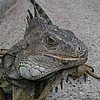
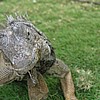
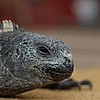
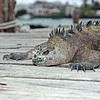
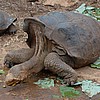
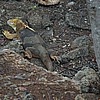
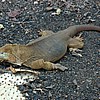
The islands lie at the confluence of powerful currents. Upwelled, nutrient-rich water fuels a dense chain of life, while on land El Niño and dry years alternately shape survival. Isolation and youth make these islands a living laboratory: finches evolving beak by beak, tortoises differing shell by shell, marine iguanas grazing in cold surf then sneezing brine to purge the salt.
Sea lions, leaner than their Californian cousins, sprawl unafraid on beaches. At dawn in the mangroves of Santa Cruz, I paddled above white-tipped reef sharks and golden rays, turtles rising among their shadows.
Diving North: Wolf and Darwin
Thermoclines drifted like ghosts, swinging temperature and visibility in seconds. The southern sites offered good diving, but the northern outposts — Wolf and Darwin — held the true drama. Current demanded respect: I pared my rig to a single strobe, tightened its arms, and pulled on leather gloves for volcanic handholds.
Beneath Darwin’s Arch
Late morning, beneath the arch, we fanned out along a wall to watch hammerheads cruise their circuits. Then the water changed- a subtle surge of pressure- and I knew something vast was coming. I swam into the blue, lens wide, as a whale shark materialised. Two frames; then the realisation I was in its path. It banked, tail stirring the sea, and slipped past.
“Being almost run down by a whale shark is a moment that settles in for life.”
Moments of Awe
A lone dolphin met me on our first dive at Darwin, gliding close, a silver-fern-shaped mating scar traced along its flank. At Cape Marshall, Black Striped Salema packed so densely we could hide within them. Penguins commuted the cliff line while sea lions threaded bubbles; blue-footed boobies stitched sky to sea with arrowing dives. Small marvels- seahorses, nudibranchs, conches- anchored the details. At Roca Redonda, fumaroles vented bubbles of hot gas: the islands still being born.
Update: Darwin’s Arch — 17 May 2021
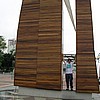
Years later, Darwin’s Arch collapsed on 17 May 2021- a natural surrender to erosion and time. The twin pillars remain, but the stone span is gone. Its loss deepened an old impression: in the Galápagos, change is constant. Rock yields to sea; life adjusts; the currents endure.
Getting There (2004 Context)
From New Zealand, reaching the islands meant long stopovers- via Los Angeles and mainland Ecuador, or through Rapa Nui and Chile. The northern route, though longer on a map, often proved quicker and kinder to divers with camera gear. Choose a capable live-aboard to reach Wolf and Darwin; that’s where the magic gathers.